Too Long Didnt Read (TLDR)
Brief summary of TB-500 peptide.
Researchers most often study TB-500 for soft-tissue repair, including muscle, tendon, and skin healing in animal models.
TB-500 is a synthetic 7-amino-acid peptide (Ac-LKKTETQ) that copies the active actin-binding region of thymosin beta-4, a 43-amino-acid protein found in nearly every human cell.
Most TB-500 evidence comes from animal and cell studies; the strongest human trial data uses the full-length thymosin beta-4 protein in a topical eye-drop formulation (RGN-259), not the injected TB-500 fragment.
TB-500 is not FDA-approved and is on the WADA Prohibited List under section S2; an FDA advisory committee will review it for compounding-list inclusion on July 23, 2026.
I checked the FDA Federal Register notice and the WADA Prohibited List directly to confirm the regulatory status here.
Definition
What it is
TB-500 is a synthetic 7-amino-acid peptide with the sequence Ac-LKKTETQ. It copies a small active region of thymosin beta-4, a 43-amino-acid protein your body already makes in nearly every cell except red blood cells. Researchers and the peptide community often call TB-500 "thymosin beta-4," but this is not quite right — TB-500 is a short fragment (positions 17–23), not the full protein. The TB-500 peptide is what most research-use vials sold online actually contain.
The fragment was first identified in horse-racing doping cases in the early 2010s, when laboratories needed to detect the synthetic version separately from the natural thymosin beta-4 already present in animal tissues. As of May 2026, TB-500 is not FDA-approved for any human use. The FDA published a Federal Register notice on April 16, 2026 listing TB-500 (free base and acetate forms) as a separate bulk drug substance for review at the Pharmacy Compounding Advisory Committee meeting scheduled for July 23, 2026.
Mechanism
How it works
The full-length thymosin beta-4 protein helps cells move and helps wounds close. It does this by binding to a building block called G-actin and controlling how much of it can join into the long fibers (F-actin) that give cells their structure and ability to migrate.
Inside the longer Tβ4 protein, the central LKKTETQ region — the same sequence that makes up TB-500 — has been described in published research as the part most directly linked to wound healing, cell migration, and new blood vessel formation (angiogenesis). That observation is the reason researchers study TB-500 as a stand-alone peptide rather than the full protein.
Important boundary: most of the published mechanism work uses the full 43-amino-acid Tβ4 protein, not the 7-amino-acid TB-500 fragment. Whether the fragment reproduces every effect of the full protein at typical research doses is not fully settled. I checked the original mechanism papers in Nature (2004) and EMBO Journal (2004) directly to confirm this distinction.
- Binds and sequesters G-actin to control cell shape and movement
- Linked in animal models to angiogenesis, cell migration, and reduced inflammation
- Most mechanism evidence is for the full Tβ4 protein, not the TB-500 fragment alone
Research use
What the research community uses TB-500 for
TB-500 is most often discussed for muscle, tendon, ligament, wound, and joint-recovery research. The plain-language idea is tissue repair. The evidence is tricky because the strongest human studies use full-length thymosin beta-4, the larger parent protein, not the shorter TB-500 fragment.
Community research-use interest usually focuses on muscle, tendon, and joint recovery. Published human studies are stronger for topical eye drops and skin-wound products made with full-length thymosin beta-4. For injected TB-500 itself, most evidence is still animal or cell research. None of this is a protocol or instruction.
- Muscle, tendon, and ligament recovery interest.
- Skin wound healing, mostly topical full-length thymosin beta-4 studies.
- Dry eye and cornea repair, using topical thymosin beta-4 eye drops.
- Heart-tissue repair models, mostly animal research.
- Injected TB-500 fragment research, mostly animal and cell studies.
Evidence
What the research shows
The strongest human evidence in this space comes from a Phase 3 randomized, placebo-controlled, double-masked trial of 0.1% RGN-259 (a topical thymosin beta-4 eye drop) in patients with neurotrophic keratopathy, published in 2023 in PMC. RGN-259-treated patients showed faster corneal healing and improved comfort versus placebo. Earlier Phase 2 work in severe dry eye disease (NCT01393132, Cornea 2015) reported a 35.1% reduction in ocular discomfort and a 59.1% reduction in corneal staining at day 56 versus vehicle, in a small 9-patient trial. Both used full-length Tβ4 in a topical eye-drop formulation, not injected TB-500.
For chronic skin wounds, Phase 2 trials of topical Tβ4 gel in pressure ulcers (NCT00382174) and venous stasis ulcers reported faster healing — by approximately one month in patients who healed — across 143 patients in one program. These trials used full-length Tβ4 applied topically to the wound surface. They did not test injected TB-500.
For musculoskeletal repair, cardiac repair, and the broader claims most often associated with TB-500, the evidence is preclinical. A 2004 Nature paper (Bock-Marquette et al.) showed full-length Tβ4 promotes cardiac cell migration and survival in mouse models. Multiple papers since have shown wound healing, tendon repair, and angiogenesis effects in rodent and equine studies. As of May 2026, no published randomized controlled trial in humans has tested the injected TB-500 7-amino-acid fragment for any musculoskeletal, cardiac, or systemic indication. This is a real evidence gap that supplier marketing does not always make clear.
Context
How it compares
TB-500 is most often compared to BPC-157, another tissue-repair research peptide. The two are different molecules with different evidence bases. BPC-157 is a 15-amino-acid peptide derived from a sequence in human gastric juice and is studied mostly in oral and injected forms in animal models for gut and tendon repair. TB-500 is a 7-amino-acid fragment of thymosin beta-4 studied mostly in animal models and a topical full-length Tβ4 formulation in humans. Neither is FDA-approved, and both are on the FDA's July 23, 2026 PCAC review agenda for the 503A Bulks List.
TB-500 is also sometimes confused with thymosin beta-4 itself or with thymosin alpha-1, a different immune-modulating peptide that is approved as a drug in some countries (Zadaxin) for hepatitis B. TB-500, BPC-157, thymosin beta-4, and thymosin alpha-1 are distinct compounds and are not interchangeable.
Boundaries
Safety and regulatory status
Observed safety data in humans is limited and almost all comes from topical Tβ4 trials, not injected TB-500. In Phase 2 ulcer and dry-eye trials, topical Tβ4 was reported as safe and well-tolerated, with no significant adverse effects in published results. There is no comparable published safety dataset for the injected TB-500 7-amino-acid fragment.
Theoretical risks discussed in the literature focus on angiogenesis. Full-length Tβ4 promotes new blood vessel growth in animal models, and Tβ4 has been observed to be upregulated in some tumor microenvironments (Cha et al., J Natl Cancer Inst 2003). No direct cancer-promoting effect of exogenous TB-500 has been demonstrated in healthy animal models, but the angiogenic mechanism is why most clinical discussions exclude patients with active or recent cancer.
As of May 2026, TB-500 is not approved by the FDA for any indication. The FDA placed TB-500 in 503A Category 2 in 2023 (significant safety concerns for compounding), then announced on April 15, 2026 that 12 peptides — including TB-500 — would be removed from Category 2 effective seven days later because the original nominations were withdrawn. The FDA confirmed in the same notice that TB-500 (free base and acetate forms) will be reviewed by the Pharmacy Compounding Advisory Committee on July 23, 2026 for possible inclusion on the 503A Bulks List. Removal from Category 2 is procedural and does not authorize compounding on its own. The World Anti-Doping Agency lists "Thymosin-β4 and its derivatives e.g. TB-500" under section S2.3 (Growth Factors) of the 2026 Prohibited List, prohibited at all times for athletes under WADA jurisdiction.
Next
What to review next
If you are tracking the regulatory side, the FDA's July 23, 2026 PCAC meeting and its public docket (FDA-2026-N-2979) are the documents that will most affect how TB-500 is accessed in the United States. Public comments were due July 9, 2026 to be reviewed by the committee. For comparison reading on the related compound most often stacked with TB-500, see the BPC-157 guide. For broader background on Garret's source-tier methodology and how this site evaluates peptide evidence, see the About page. Peptide Advisors does not publish dosing protocols; for protocol-focused research, review Peptide Dosing Protocols.
Sourcing
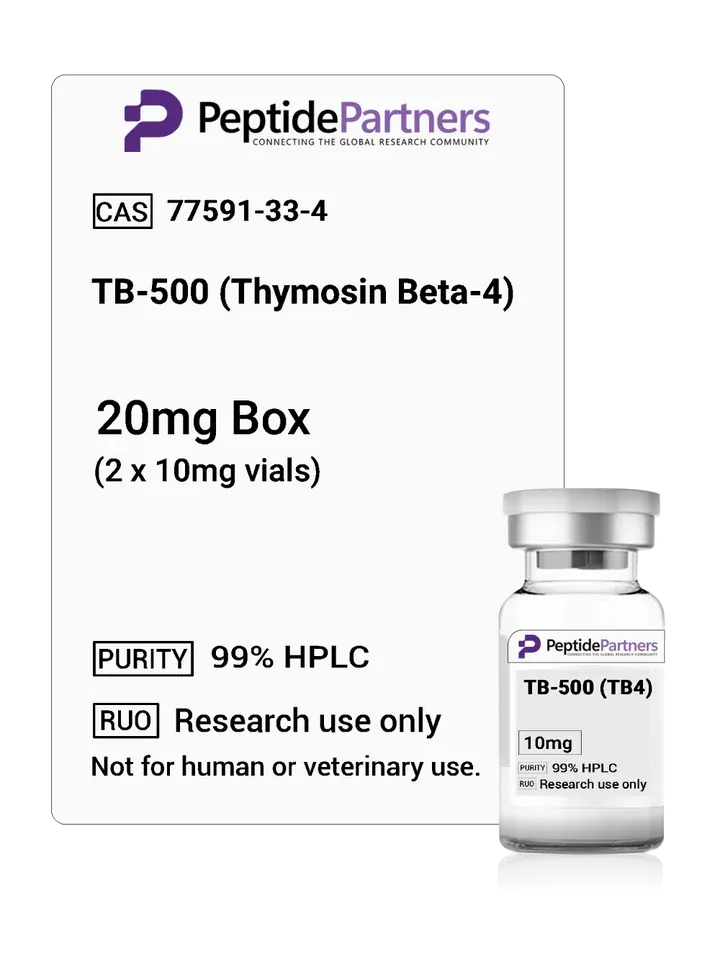
TB-500 Peptide
View a trusted research-use source for TB-500 peptide.
Buy TB-500View COAFAQ
TB-500 FAQs
Short answers for the reusable peptide detail template.
What is TB-500?
TB-500 is a synthetic 7-amino-acid peptide with the sequence Ac-LKKTETQ. It copies the central actin-binding region of thymosin beta-4, a 43-amino-acid protein found in nearly every human cell. Researchers study TB-500 mostly in animal models for tissue repair, wound healing, and inflammation. TB-500 is not FDA-approved and is on the WADA Prohibited List under section S2.
Is TB-500 the same as thymosin beta-4?
No. Thymosin beta-4 is the full 43-amino-acid protein your body produces naturally. TB-500 is the synthetic 7-amino-acid fragment that copies positions 17 through 23 of that protein. Most TB-500 evidence in humans comes from research on the full thymosin beta-4 protein, not the fragment, and most of that human research uses topical formulations rather than injection. Many supplier and community pages use the two names interchangeably, but the molecules are not identical.
What does TB-500 do in research models?
Most published TB-500 and thymosin beta-4 research focuses on tissue repair. Animal and cell studies have looked at skin wound healing, corneal healing, cardiac repair after simulated injury, and tendon and muscle recovery. The proposed mechanism centers on actin regulation, cell migration to injury sites, new blood vessel growth, and reduced inflammation. Human evidence is limited and mostly uses the full thymosin beta-4 protein in topical formulations.
Is TB-500 FDA-approved?
No. As of May 2026, TB-500 is not approved by the FDA for any human use. It was placed in 503A Category 2 in 2023 and was removed from that category effective late April 2026. The FDA's Pharmacy Compounding Advisory Committee will review TB-500 on July 23, 2026 to consider whether it should be added to the 503A Bulks List for compounding pharmacies. Removal from Category 2 is procedural and does not authorize compounding on its own.
What are the side effects of TB-500?
Published human safety data is limited and mostly comes from topical thymosin beta-4 trials, not injected TB-500. In those trials, the most common findings were mild and the drug was generally well-tolerated. Theoretical concerns focus on angiogenesis, since the underlying mechanism promotes new blood vessel growth. Most clinical discussions screen out patients with active or recent cancer because of this. There is no comparable published safety dataset for the injected TB-500 fragment specifically.
TB-500 vs BPC-157: what is the difference?
TB-500 and BPC-157 are different molecules. TB-500 is a 7-amino-acid fragment of thymosin beta-4 studied mostly for tissue and wound healing. BPC-157 is a 15-amino-acid peptide derived from a sequence in human gastric juice, studied mostly for gut and tendon repair in animal models. They are commonly stacked in community research-use protocols, but neither has been tested in a published human RCT for the injuries most associated with the stack. Both are on the FDA's July 2026 PCAC review agenda.
Is TB-500 banned in sports?
Yes. The World Anti-Doping Agency 2026 Prohibited List names "Thymosin-β4 and its derivatives e.g. TB-500" under section S2.3 (Growth Factors), prohibited at all times. Detection methods using LC-MS/MS can identify TB-500 metabolites for an extended period after administration. Athletes subject to WADA testing should treat both TB-500 and full-length thymosin beta-4 as banned substances.
What dose of TB-500 should someone take?
Peptide Advisors does not publish dosing protocols. For protocol-focused research that covers loading and maintenance schedules, reconstitution, and cycling, see Peptide Dosing Protocols. Any decision to use a peptide should be made with a qualified healthcare provider after a full review of your health history.
References
/ 11TB-500 sources & citations
Primary sourcesPrimary clinical literature and pharmacology references behind this guide.
- 01
Synthesis and characterization of the N-terminal acetylated 17-23 fragment of thymosin beta 4 identified in TB-500, a product suspected to possess doping potential
Esposito S, Deventer K, Goeman J, Van der Eycken J, Van Eenoo P · Drug Testing and Analysis · 2012
Establishes that the commercial product sold as TB-500 is the N-acetylated 17–23 fragment (Ac-LKKTETQ) of thymosin beta-4 — the basis for the fragment-vs-full-protein distinction throughout this page.
- 02
Thymosin β4 (beta-4) activates integrin-linked kinase and promotes cardiac cell migration, survival and cardiac repair
Bock-Marquette I, Saxena A, White MD, Dimaio JM, Srivastava D · Nature · 2004
Foundational mechanism paper showing full-length Tβ4 promotes cardiac cell migration and survival in mouse models; central reference for cardiac claims.
- 03
Structural basis of actin sequestration by thymosin-β4: implications for WH2 proteins
Irobi E, Aguda AH, Larsson M, Guerin C, Yin HL, Burtnick LD, Blanchoin L, Robinson RC · EMBO Journal · 2004
X-ray structural evidence for how Tβ4 sequesters G-actin; cited for the actin-binding mechanism explanation.
- 04
Thymosin β4 (beta-4): a multi-functional regenerative peptide. Basic properties and clinical applications
Goldstein AL, Hannappel E, Sosne G, Kleinman HK · Expert Opinion on Biological Therapy · 2012
Authoritative review summarizing the regenerative biology of Tβ4; cited as a Tier 2/3 mechanism and clinical-context anchor.
- 05
Thymosin β4 (beta-4) significantly improves signs and symptoms of severe dry eye in a phase 2 randomized trial
Sosne G, Dunn SP, Kim C · Cornea · 2015
Phase 2 RCT (NCT01393132) of topical 0.1% Tβ4 (RGN-259) in severe dry eye: 35.1% reduction in ocular discomfort and 59.1% reduction in corneal staining at day 56 vs vehicle.
- 06
0.1% RGN-259 (Thymosin β4 (beta-4)) Ophthalmic Solution Promotes Healing and Improves Comfort in Neurotrophic Keratopathy Patients in a Randomized, Placebo-Controlled, Double-Masked Phase III Clinical Trial
Sosne G, Kleinman HK, et al. · PMC (peer-reviewed open access) · 2023
Phase 3 trial of topical Tβ4 in neurotrophic keratopathy showing significant healing and comfort improvements; the most advanced human evidence in the Tβ4/TB-500 family, but uses the full 43-amino-acid protein topically — not injected TB-500 fragment.
- 07
The regenerative peptide thymosin β4 (beta-4) accelerates the rate of dermal healing in preclinical animal models and in patients
Treadwell T, Kleinman HK, Crockford D, Hardy MA, Guarnera GT, Goldstein AL · Annals of the New York Academy of Sciences · 2012
Reports Phase 2 human trial findings in pressure ulcers and venous stasis ulcers (143 patients), showing topical Tβ4 accelerated healing by approximately one month in patients who healed.
- 08
Study of Thymosin Beta 4 in Patients With Pressure Ulcers (NCT00382174)
RegeneRx Biopharmaceuticals, Inc. · ClinicalTrials.gov · 2010
Registry entry for the dose-response Phase 2 pressure ulcer trial of topical Tβ4 gel; primary registry evidence for human dermal trial program.
- 09
Pharmacy Compounding Advisory Committee; Notice of Meeting; Establishment of a Public Docket; Request for Comments — Bulk Drug Substances Nominated for Inclusion on the Section 503A Bulk Drug Substances List
U.S. Food and Drug Administration · Federal Register · 2026
Primary FDA notice (April 16, 2026) confirming the July 23, 2026 PCAC meeting will review TB-500 (free base and acetate) for the 503A Bulks List; date-anchored regulatory citation.
- 10
July 23-24, 2026: Meeting of the Pharmacy Compounding Advisory Committee
U.S. Food and Drug Administration · FDA Advisory Committee Calendar · 2026
Official FDA meeting page listing TB-500 alongside BPC-157, KPV, and MOTs-C as the substances under PCAC review on July 23, 2026.
- 11
The Prohibited List 2026 — Section S2: Peptide Hormones, Growth Factors, Related Substances and Mimetics
World Anti-Doping Agency · WADA Code · 2026
Primary WADA source naming "Thymosin-β4 and its derivatives e.g. TB-500" under section S2.3 Growth Factors, prohibited at all times.
Medical Disclaimer
This article is provided for educational research purposes only and should not be treated as medical advice. TB-500 is not FDA-approved. Compounded versions should be used only with appropriate physician oversight. Do not begin any peptide protocol without speaking with a licensed healthcare provider, and remember that individual responses can vary significantly.
Written by

Garret Grant
Founder & Lead Researcher · B.S. Civil Engineering, UCLA
Garret personally researches, writes, and reviews every guide on Peptide Advisors. Each page is sourced from peer-reviewed clinical trials, systematic reviews, and regulatory filings — with every claim cited and the source hierarchy published openly.
Last reviewed