Too Long Didnt Read (TLDR)
Brief summary of the Wolverine Stack peptide blend.
The Wolverine stack is a nickname in the research community for combining BPC-157 and TB-500, two peptides studied for soft-tissue healing and recovery.
BPC-157 is a 15-amino-acid peptide originally isolated from human gastric juice, while TB-500 is a synthetic fragment of Thymosin β4 (beta-4), a naturally occurring actin-regulating protein.
Most evidence for both compounds is preclinical, with limited human research. A 2025 systematic review (Vasireddi et al.) reported no human safety data for BPC-157.
Neither peptide is FDA-approved. As of May 2026, both were removed from FDA 503A Category 2, ahead of a scheduled PCAC review in July 2026.
Definition
What the Wolverine stack is
The Wolverine stack is an informal, or nickname in the research and peptide community for pairing two compounds: BPC-157 and TB-500. The name comes from the Marvel character known for fast healing. It is not a branded drug, a standardized clinical protocol, or an FDA-approved treatment.
BPC-157 is a 15-amino-acid peptide first described in research from a single Croatian group beginning in 1993. It is studied in animal models for tendon, ligament, gut, and blood-vessel pathways. TB-500 is a synthetic fragment of Thymosin β4 (beta-4), a small protein found naturally in most cells of the body. Researchers study it for cell migration, wound healing, and cardiac repair.
Some suppliers also sell a pre-blended vial that contains both peptides in one bottle. Whether buyers use separate vials or a blend, the underlying compounds are the same.
- Two peptides, not one drug
- Informal community name, not a medical protocol
- Sometimes sold as a pre-blended research vial
Mechanism
How the research compounds work together
The two peptides are paired because researchers believe they act on different parts of the healing process. Studies in animals describe BPC-157 as a local repair signal and TB-500 as a systemic cell-movement signal.
BPC-157 has been shown in rodent models to raise vascular endothelial growth factor (VEGF), helping form new blood vessels at injury sites. It also appears to interact with the nitric oxide system and several growth-factor pathways. TB-500 binds G-actin, the building block of the cell skeleton, which lets cells change shape and migrate. The parent molecule Thymosin β4 (beta-4) also reduces inflammatory signaling and supports cell survival in cardiac models.
Direct evidence for the combination is limited. The synergy story is built from individual-compound research and reasoning about overlapping pathways, not from a controlled trial that compared the stack against either peptide alone.
- BPC-157: local angiogenesis, growth factor support, NO modulation
- TB-500: actin binding, cell migration, anti-inflammatory effects
- No published controlled trial has tested the combination directly
Research use
What the research community uses the Wolverine stack for
The Wolverine stack is most often discussed for soft-tissue recovery. The common topics are tendon, ligament, joint, muscle, and connective-tissue repair. Some discussion also includes gut-tissue research, but that mainly comes from BPC-157 studied on its own.
These are community research-use topics, not proven human uses. BPC-157 has only limited human work, and most healing claims come from animal or cell studies. TB-500 itself has no completed human trials, though its larger parent protein, thymosin beta-4, has been studied in humans. Peptide Advisors does not publish dosing protocols. For protocol-focused research, review Peptide Dosing Protocols.
- Tendon and ligament recovery interest.
- Soft-tissue, joint, and muscle repair research.
- Gut-tissue research, mostly from BPC-157 alone.
- Heart-repair research, mostly from thymosin beta-4 studies.
- Most claims come from animal data, not human trials.
Evidence
What the research actually shows
Direct stack evidence is the cleanest place to start, because there is none. No peer-reviewed clinical trial has tested BPC-157 and TB-500 together in humans. Every claim about the combination relies on extrapolation from each compound studied alone.
For BPC-157, the strongest published synthesis is a 2025 systematic review by Vasireddi et al. in HSS Journal. The authors searched PubMed, Cochrane, and Embase through June 2024. They found that BPC-157 improved structural and functional outcomes across rodent muscle, tendon, ligament, and bone injury models. They also reported one small retrospective case series in which 7 of 12 patients with chronic knee pain reported relief lasting more than six months after intra-articular (injected into a joint) injection. The review concluded that no clinical safety data were found.
For TB-500, most of the cited research is on Thymosin β4 (beta-4), the larger natural protein from which TB-500 is derived. Two Nature publications by Bock-Marquette et al. (2004) and Smart et al. (2007) established the cardiac repair and progenitor-cell mobilization models that drive current research interest. A Phase 2b trial of recombinant Thymosin β4 (beta-4) in acute myocardial infarction (NCT05984134) completed enrollment with 90 participants randomized across placebo, 0.5 µg/kg, and 1.0 µg/kg dose arms. I verified the design and primary endpoint detail directly against the ClinicalTrials.gov registry entry.
What hasn't been studied: long-term human safety, head-to-head comparison of the stack against either peptide alone, dosing-equivalence between rodent models and humans, or outcomes in any single defined patient population. This is the main reason peptide-research aggregator sites and physicians describe the Wolverine stack as theoretically reasonable but unvalidated.
Boundaries
Safety and regulatory status
Observed safety from human work is narrow. A small intravenous BPC-157 pilot study (Lee et al., 2024) reported no measurable changes in cardiac, liver, kidney, or thyroid biomarkers across two participants given 10 mg and then 20 mg infusions. A Phase 1 IV Thymosin β4 (beta-4) study in healthy volunteers reported no serious adverse events at doses up to 1,260 mg. These are very small samples and short observation windows, not long-term safety datasets.
Theoretical risks are different from observed risks. Both peptides promote angiogenesis, which is the same biological process that solid tumors use to grow new blood supply. Several preclinical papers — including Cha et al. (2003) in JNCI and Morita et al. (2018) in Molecular Cancer Research — have linked Thymosin β4 (beta-4) to increased tumor cell migration and metastasis in cancer models. Cha et al. reported that Thymosin β4 (beta-4) overexpression increased lung metastatic nodules in mice from a mean of 10.9 to 46.7 (P<.001). This is a research signal in cancer biology, not an established human risk, but it is the reason oncologists writing about the stack treat the BPC-157 and TB-500 cancer-risk profiles as different rather than equivalent.
Regulatory status as of April 22, 2026: both BPC-157 and TB-500 were removed from FDA 503A Category 2, the list of bulk drug substances flagged for significant safety concerns. The FDA published the change on April 15, 2026, and scheduled both substances for review by the Pharmacy Compounding Advisory Committee (PCAC) on July 23, 2026, in both acetate and free-base forms. Removal from Category 2 is not approval; it moves the substances into a formal scientific review path. Neither peptide is FDA-approved for any human indication, and both have been described as banned in professional sport (BPC-157 was temporarily WADA-banned in 2022).
- No long-term human safety data exists for either compound
- Theoretical metastasis concern: Tβ4 promotes cancer-cell migration in preclinical models
- Off FDA 503A Category 2 list as of April 22, 2026
- PCAC review scheduled for July 23, 2026
- Not FDA-approved for any human indication
Context
How it compares to nearby options
The closest research comparisons are the individual compounds alone. Researchers focused on gut or local tendon work often discuss BPC-157 by itself. Researchers focused on systemic recovery or cardiac models often discuss TB-500 (or Thymosin β4 (beta-4)) by itself. These compounds are not interchangeable, and a stack is not automatically better than either compound used alone.
Other research-community recovery stacks include adding GHK-Cu (a copper peptide), creating the GLOW stack, for skin and connective tissue research, or a growth-hormone secretagogue like Ipamorelin for separate research questions. These are different categories with different evidence bases. A reader trying to choose a research focus should compare the underlying primary literature on each compound rather than picking a stack name.
Next
What to review next
If you want to go deeper on either compound, start with the BPC-157 systematic review by Vasireddi et al. (2025) for the most current synthesis of preclinical and limited human evidence, and the Thymosin β4 (beta-4) Phase 2b acute myocardial infarction trial (NCT05984134) for the most rigorous human data on the TB-500 parent molecule.
On the regulatory side, the July 23, 2026 PCAC meeting is the most important upcoming event. The FDA's published meeting materials (released roughly 48 hours before the session) will indicate which way the formal compounding review is leaning. For research-protocol questions, Peptide Dosing Protocols maintains the relevant protocol page. For the individual compounds on Peptide Advisors, see the BPC-157 and TB-500 guides linked above.
Sourcing
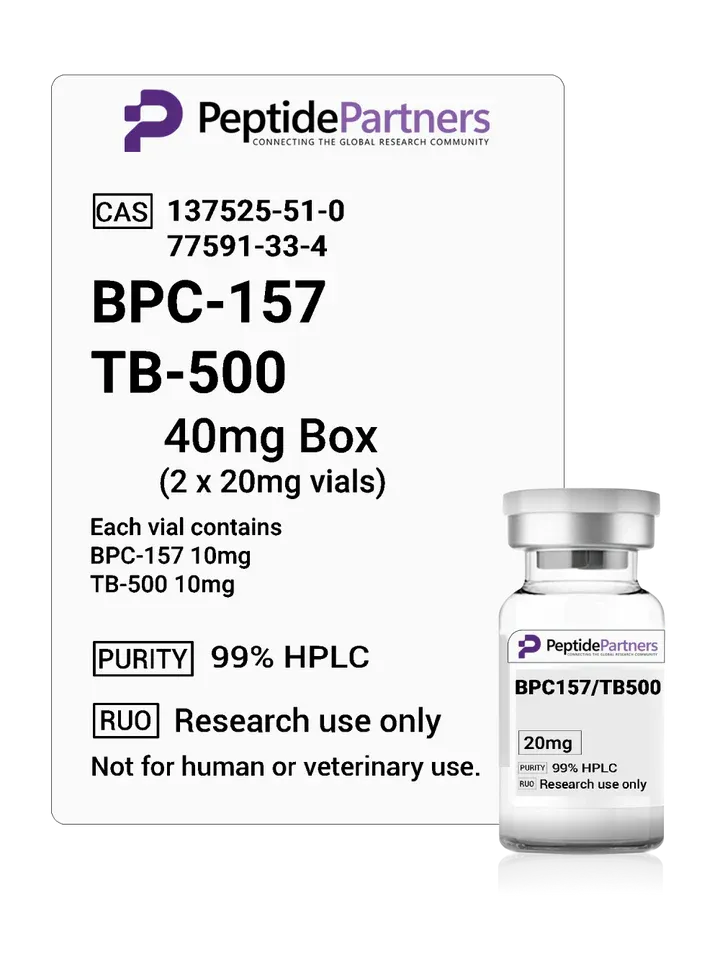
Wolverine Blend
View a trusted research-use source for the Wolverine peptide blend (BPC-157, TB-500).
View Wolverine blendView COAFAQ
Wolverine Stack FAQs
Short answers for the reusable peptide blend detail template.
What is the Wolverine stack?
The Wolverine stack is an informal research-community name for pairing two peptides, BPC-157 and TB-500. It is named after the Marvel character known for rapid healing. It is not an FDA-approved treatment, a standardized medical protocol, or a single drug product, even though some suppliers sell a pre-blended vial that contains both compounds.
Is the Wolverine stack FDA-approved?
No. Neither BPC-157 nor TB-500 is FDA-approved for any human indication. As of April 22, 2026 the FDA removed both from 503A Category 2, which is the list of bulk drug substances flagged for significant safety concerns. Both substances are scheduled for formal review by the Pharmacy Compounding Advisory Committee on July 23, 2026. Removal from Category 2 is a procedural step toward review, not approval.
Is there direct human research on the Wolverine stack?
No published clinical trial has tested BPC-157 and TB-500 together in humans. Most BPC-157 evidence comes from animal models, with one small case series in chronic knee pain and a two-person IV pilot. The closest human data on TB-500 is on its parent molecule Thymosin β4 (beta-4), including a Phase 2b acute myocardial infarction trial (NCT05984134). Claims about the stack working as a combination are extrapolated from individual-compound research.
What does the research community use the Wolverine stack for?
Research and peptide forums most often discuss it in soft-tissue contexts: tendon and ligament injury models, joint research, and post-training recovery interest. BPC-157 alone is also discussed for gut research. These are research framings, not proven human use cases, and Peptide Advisors does not publish dosing protocols or treatment instructions.
Why are BPC-157 and TB-500 sometimes treated as different on cancer risk?
Both peptides promote new blood vessel formation, which is a general angiogenesis concern. The added concern with Thymosin β4 (beta-4) (the parent of TB-500) is that several preclinical papers, including Cha et al. (2003) and Morita et al. (2018), have specifically linked it to increased cancer cell migration and metastasis in animal models. That is a separate biological signal from BPC-157's profile and is why some clinicians describe the two compounds' cancer-risk discussions as not equivalent. This is research-stage data, not an established human risk.
What dose of the Wolverine stack should I take?
Peptide Advisors does not publish dosing protocols, cycle schedules, or injection instructions for any peptide stack. For protocol-focused research, review Peptide Dosing Protocols. Any human use of either compound would need to occur under qualified medical supervision and is constrained by the regulatory status above.
Is the pre-blended Wolverine vial different from buying BPC-157 and TB-500 separately?
Chemically, no. A pre-blended vial contains the same two peptides in fixed proportions, typically 10 mg of each in a 20 mg total vial. Researchers who want flexibility for separate dose ratios prefer two vials. Researchers who want fewer reconstitution steps prefer a blend. Either way, the same regulatory status, evidence boundaries, and safety questions apply, and verifying supplier testing is the more meaningful decision than blend versus separate.
How long do researchers typically run a Wolverine stack cycle?
Cycle lengths in research-community discussion vary widely and have no clinical-trial validation behind them. Peptide Advisors does not provide cycle schedules. The most defensible reading of the available data is that no published human trial has established a cycle length, on-period, or off-period for either peptide individually or for the stack. Peptide Dosing Protocols maintains protocol-level reference content separate from this educational guide.
References
/ 10Wolverine Stack sources & citations
Primary sourcesPrimary clinical literature and pharmacology references behind this peptide blend guide.
- 01
Emerging Use of BPC-157 in Orthopaedic Sports Medicine: A Systematic Review
Vasireddi N, Hahamyan H, Salata MJ, et al. · HSS Journal · 2025
Most current systematic review of BPC-157 across orthopaedic injury models. Found no clinical safety data and concluded all human evidence is Level IV–V.
- 02
Multifunctionality and Possible Medical Application of the BPC 157 Peptide — Literature and Patent Review
Multiple authors · Pharmaceuticals (MDPI), PMC review · 2025
Comprehensive PMC review of BPC-157 mechanism, ADME, and regulatory status. Confirms no FDA approval and notes WADA's temporary 2022 ban.
- 03
Safety of Intravenous Infusion of BPC157 in Humans: A Pilot Study
Lee E, Padgett B · Journal of Orthopaedic Experience & Innovation · 2024
Two-participant IV pilot at 10 mg and 20 mg doses. No measurable biomarker changes across heart, liver, kidney, thyroid, or glucose. Sample size too small to support broad safety claims.
- 04
Thymosin beta4 activates integrin-linked kinase and promotes cardiac cell migration, survival and cardiac repair
Bock-Marquette I, Saxena A, White MD, DiMaio JM, Srivastava D · Nature · 2004
Foundational Nature paper on Thymosin β4 (beta-4)'s cardiac repair pathway. Anchor source for the TB-500 mechanistic story.
- 05
Thymosin beta4 induces adult epicardial progenitor mobilization and neovascularization
Smart N, Risebro CA, Melville AAD, et al. · Nature · 2007
Second landmark Nature paper establishing Thymosin β4 (beta-4) as a progenitor-cell mobilizer in cardiac models.
- 06
Efficacy and Safety of Recombinant Human Thymosin β4 (beta-4) (NL005) for Injection in Patients with Acute Myocardial Infarction: a Phase IIb Clinical Study
Beijing Northland Biotech, study sponsor · ClinicalTrials.gov · 2024
Completed Phase 2b trial in 90 acute MI patients. Closest direct human evidence for the TB-500 parent molecule. I verified the design directly against the ClinicalTrials.gov registry entry.
- 07
Role of thymosin beta4 in tumor metastasis and angiogenesis
Cha HJ, Jeong MJ, Kleinman HK · Journal of the National Cancer Institute (JNCI) · 2003
Foundational paper linking Thymosin β4 (beta-4) overexpression to a 4.3-fold increase in lung metastatic nodules in B16-F10 mouse models. Primary citation behind the metastasis-risk discussion.
- 08
Tumor Progression Is Mediated by Thymosin-β4 through a TGFβ/MRTF Signaling Axis
Morita T, Hayashi K · Molecular Cancer Research (AACR) · 2018
Mechanistic follow-up showing the TGFβ/Tβ4/MRTF/SRF pathway drives metastasis in melanoma models. High Tβ4 expression correlated with poor survival in human cancer datasets.
- 09
FDA Removes 12 Peptides from 503A Category 2
Newtropin regulatory analysis · Newtropin · 2026
Confirms April 22, 2026 effective date for Category 2 removal of BPC-157, TB-500, KPV, MOTs-C, and others. Documents the July 23, 2026 PCAC meeting date.
- 10
FDA Puts BPC-157, TB-500, and 5 Other Peptides Under the Microscope: What Prescribers Need to Know About the 503A Review
Lengea Law regulatory analysis · Lengea Law · 2026
Independent legal analysis of the same FDA action. Confirms the PCAC July 23–24, 2026 schedule and the rulemaking path required for any 503A bulks-list addition.
Medical Disclaimer
This article is provided for educational research purposes only and should not be treated as medical advice. Wolverine Stack is not an FDA-approved protocol or recommendation. Peptide blends should be evaluated only with appropriate physician oversight. Do not begin any peptide protocol without speaking with a licensed healthcare provider, and remember that individual responses can vary significantly.
Written by

Garret Grant
Founder & Lead Researcher · B.S. Civil Engineering, UCLA
Garret personally researches, writes, and reviews every guide on Peptide Advisors. Each page is sourced from peer-reviewed clinical trials, systematic reviews, and regulatory filings — with every claim cited and the source hierarchy published openly.
Last reviewed